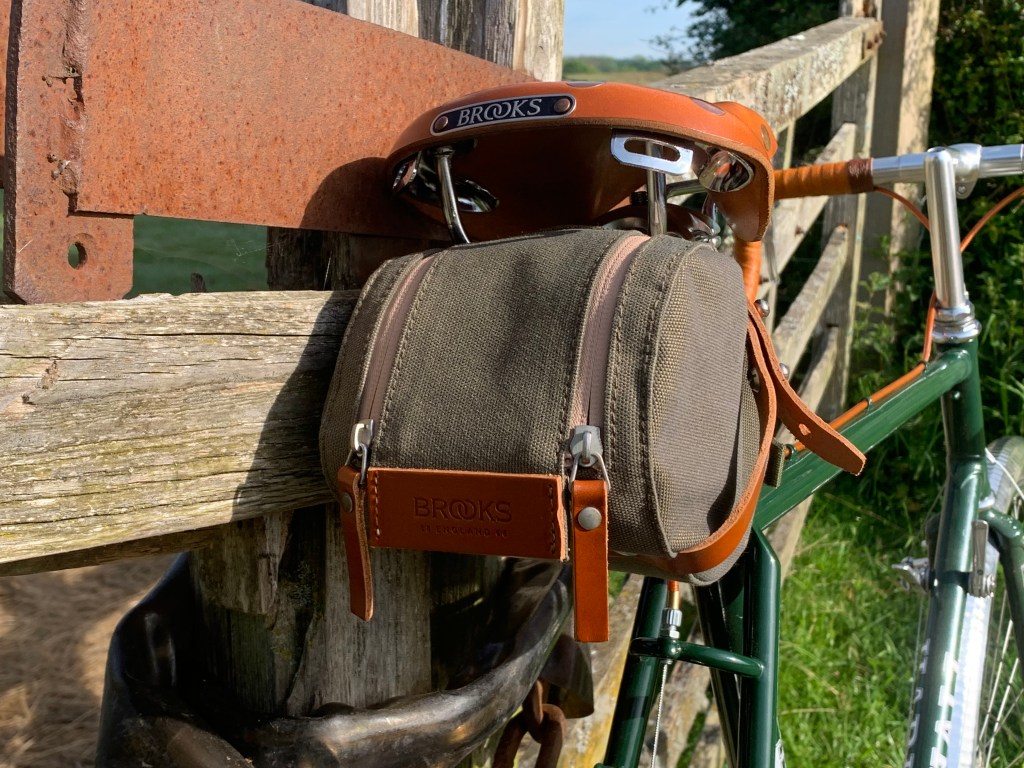
A week of warmth after a winter of wet that continued long into spring. Dried out lanes devoid of mud. Well apart from one down and away from the local brook. But car-submerging depths at the ford are long gone. Time for a change of bike – black to green. Since completion of its build, one ride back in February the only outing for The Green Bike. I pumped the 700×35 tyres to 40 psi and set off. Squealing, really annoying squealing. The squeal of rubber on metal. The front wheel the origin. The clearances are tight around the fork crown. I had to indent the guard to fit the gap, and a 35mm tyre is at the limit of what can be slotted in; seemingly beyond the limit at 40 psi, given the noise. A two-tap-on-the-valve release of air and the bike was successfully de-squealed. At this point I noticed I’d forgotten to transfer my frame pump from The Black Bike. Go back? Nah, sod it, live life on the edge. It was over a month since the annual hedge-shred by the local farmers and the usual puncture-protagonists (thorns) should have been washed away.
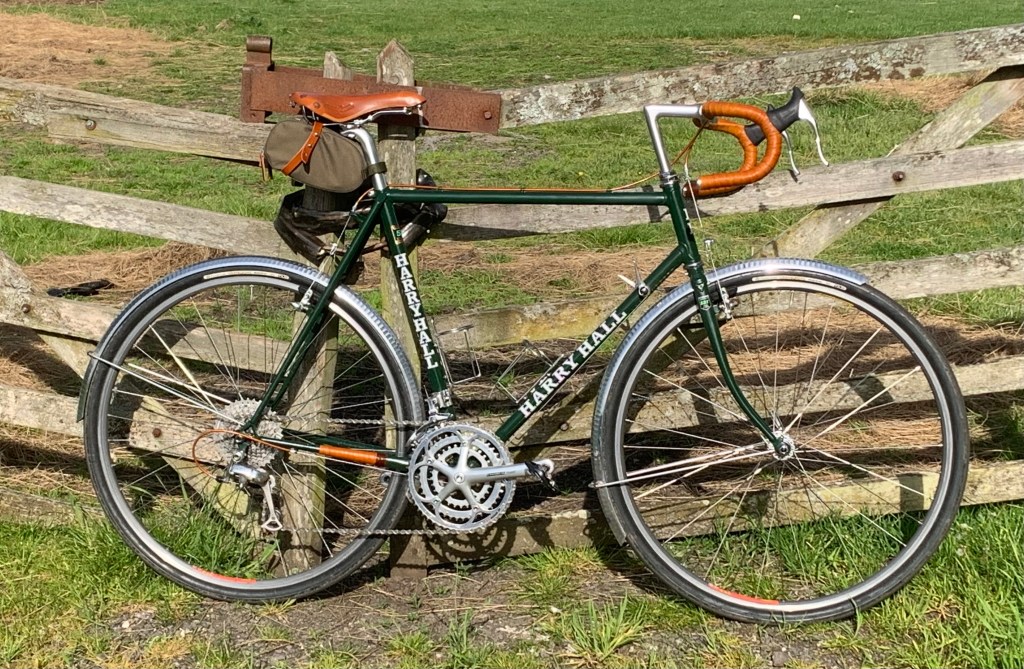
What a contrast to ride The Green Bike after months on The Black Bike. The latter’s tubing is robust (Surly’s Natch Tubing) and would no doubt happily take on a reasonably loaded tour without complaint. The Green Bike is far more sprightly, and dare I say the P word? It planes or at least there is the sensation of the frame (skinny Reynolds 531c tubing) flexing in tune with my pedal strokes. Being lighter too, tackling the local hills (short, steep affairs, but thankfully not on the scale of Asterton Bank) on The Green Bike felt easier. I know, all subjective assertions, no objective data to back it up, but long gone are the days of riding by numbers.
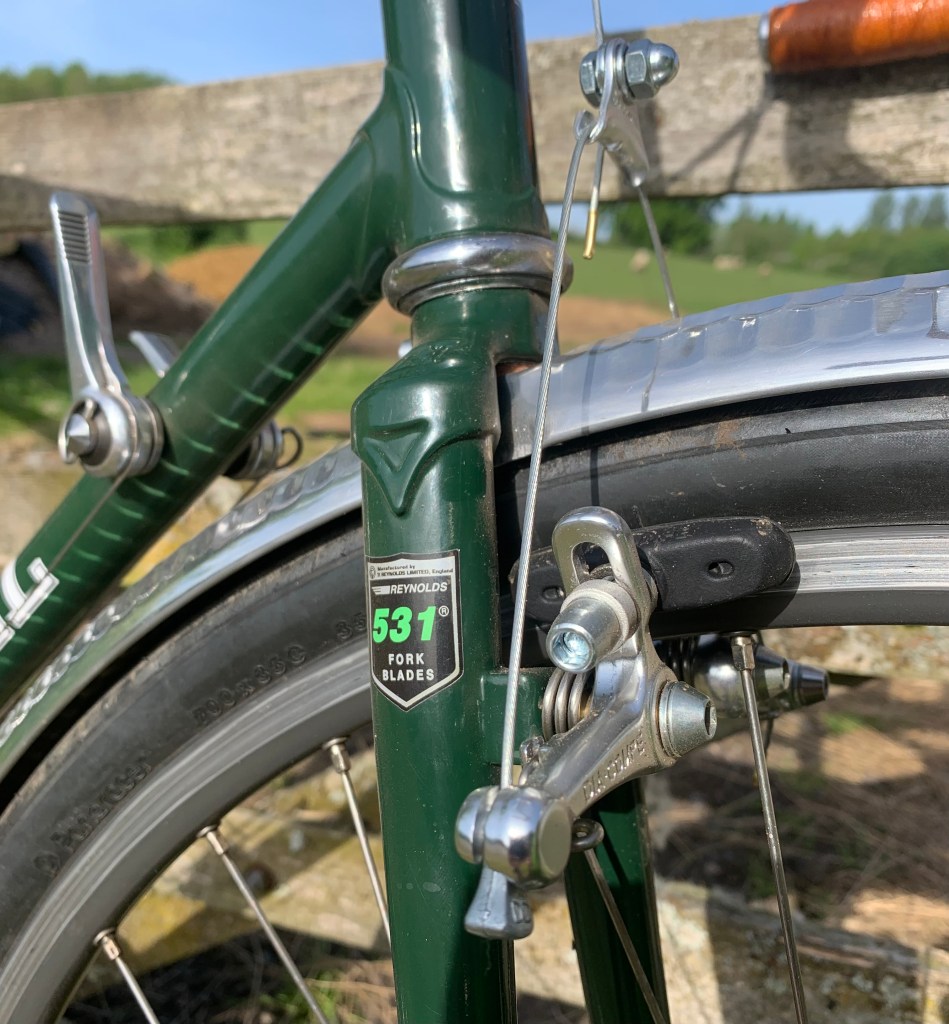
Up front there was a notable difference in comfort. The Green Bike’s fork is a curved beauty. Not only pleasant on the eye, but the elegant taper has a mechanical function too. With the braking force being applied at the rim, the widest part of the fork blades is at the crown in order to prevent the fork twisting (being oval helps too). Not requiring this strength lower down, the blades taper to the dropouts and can flex, providing suspension and comfort from road-induced vibrations (bloody hell, this is sounding like a proper bike review – not very Cyclokairos). The quill stem must be helping too with comfort. The Black Bike’s forks are also steel, but having disc brakes, the fork ends are more burly since the braking force is being applied much closer to the thing you’re trying to slow down (the wheel hub) and more force is required since the leverage is less. I think. Chemistry is my subject, it’s been a while since I taught some physics.
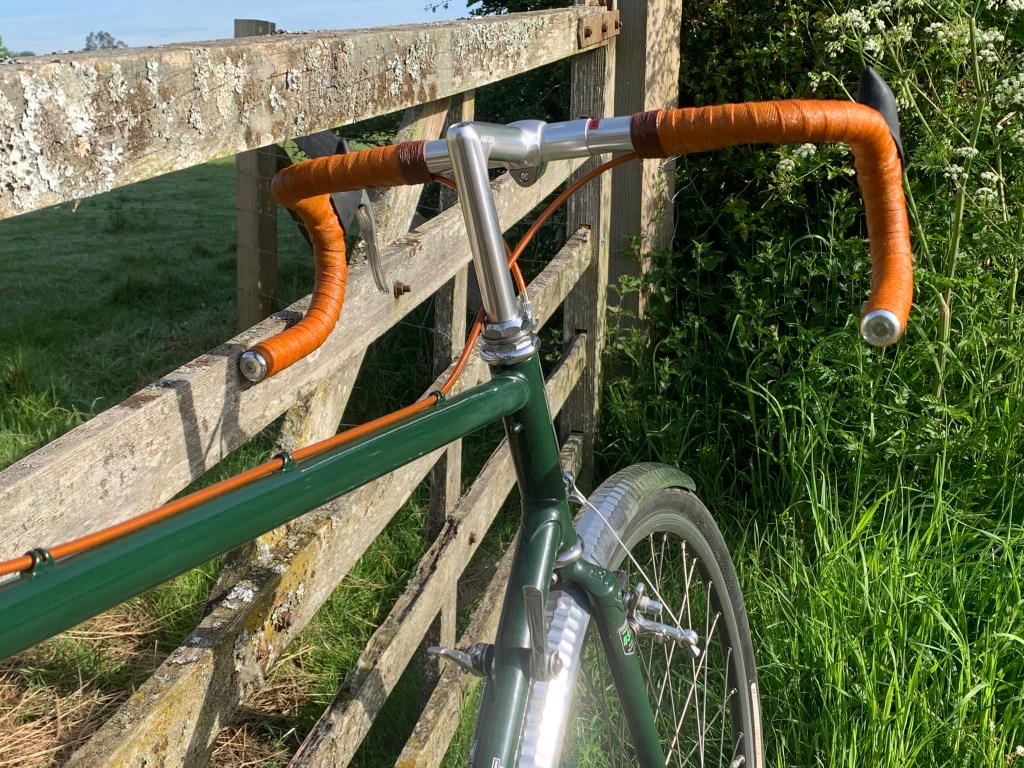
I also found myself riding more on the ramps of the handlebars than the brake lever hoods – those are where I find myself the most on The Black Black. They feel a touch further away on The Green Bike, but it may be the fact they are not as big and less of my hand sits on them – its rear angling up on to the ramps. It may just be a getting-used-to-it-thing. The drops were comfortably accessible and time spent here was clocked up.
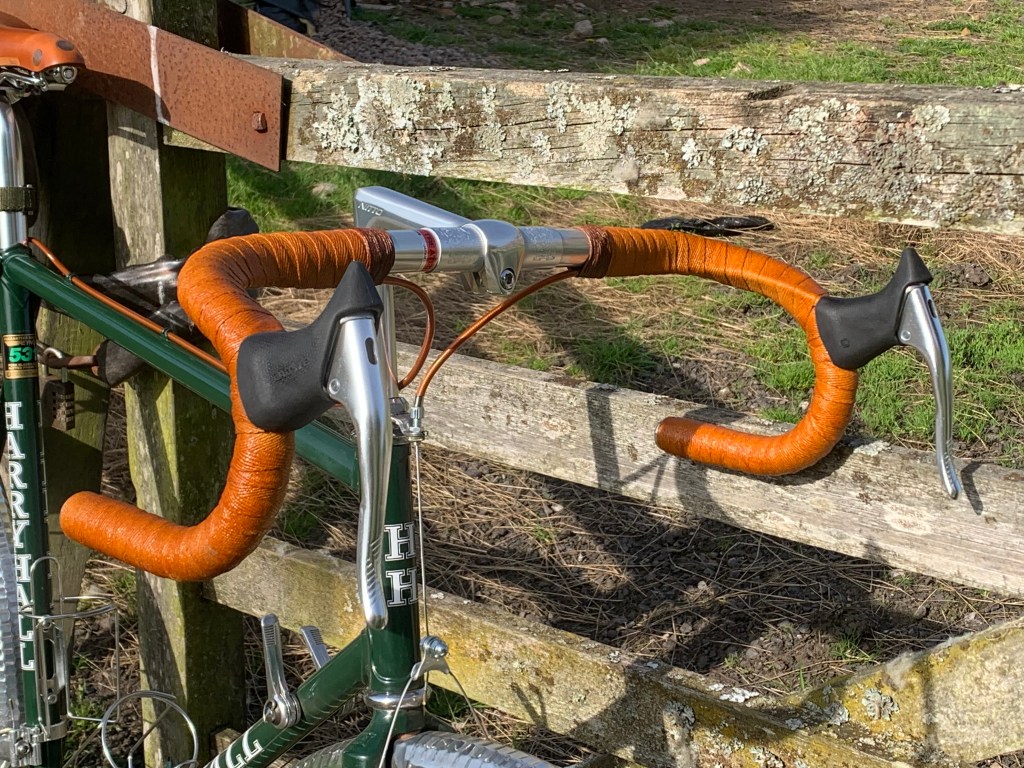
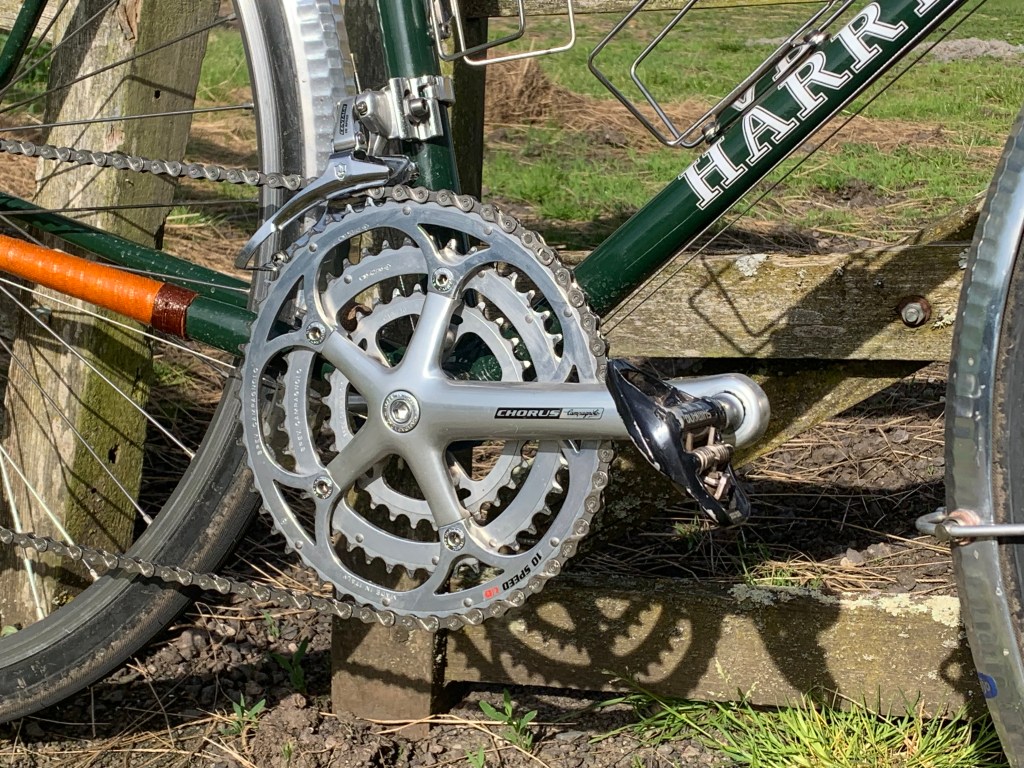
It took a short while to adjust to the shifters (friction, of course) on the down tube. A Vitus 979 with Shimano Sante the last time I used shifters placed there. What the cables have to do running through my mind: tighten to get an easier gear at the rear, slacken for the front. Lever on the right towards me, lever on the left away from me. Muscle memory soon kicked in, but it was rewarding to actually think through how the gears worked and to listen to the chain to ensure my adjustments were placing it correctly.
With the sun shining, the temperature the warmest of the year, life was grand. Life lived in these moments, atelic moments, is surely the most worthwhile? No end goal, just the experience of the process, a process done for its own sake.
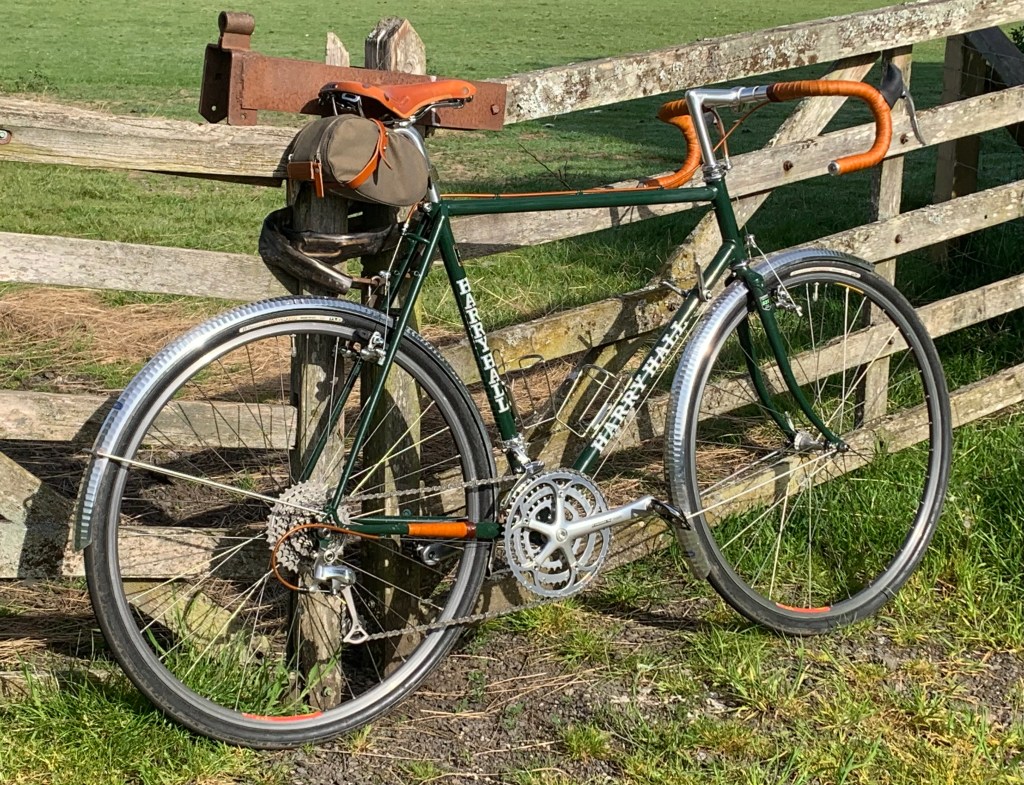
Then, arriving home, the rabbit hole of which hand operating which brake. Originally bikes just had a rear brake. In France this was a rim brake, and with most people being right handed it made sense to use the stronger hand – rear brake lever on the right then. When the law dictated a front brake was required too, the lever ended up where there was space – the left side of the handlebar. The US followed the French way. In the UK (and Italy), coaster brakes were the norm and no lever required, so when front brakes became standard and having the choice of left or right, the lever went to the right – more right handed people again. Riding The Green Bike, it struck me I have a right hodgepodge of set-ups. The Gios came from Spain and the front-brake is operated by the left lever; the Pinarello was built in its image and has the same brake set up. The Blue Bike and The Red Bike are the same (no choice with The Red Bike since it came with the pre-bled hydraulic disc brakes that way round). The Black Bike and The Purple Bike that is also White are the opposite; the right-hand side lever is for the front brake. Do I ever think about which way to route the cables? The Green Bike is the French way, and being left-handed, probably the best way for me, my stronger hand used for the brake that has to stop the forward transfer of my and the bike’s weight. But either way, I seem to stop just fine, even when I deviate from the sedate pace of contemplative cyclotourism.
 Cyclokairos
Leave a comment